
This post may contain affiliate links or promotional content. We may earn a small commission at no additional cost to you. Information provided for educational purposes only. Please consult experts before making financial or legal decisions.
Consider sponsoring this post to help us share this knowledge with others! Email our team today.
Subscribe to Run The Money on Substack for more insights on financial resilience, audience growth, and building freedom in uncertain times.
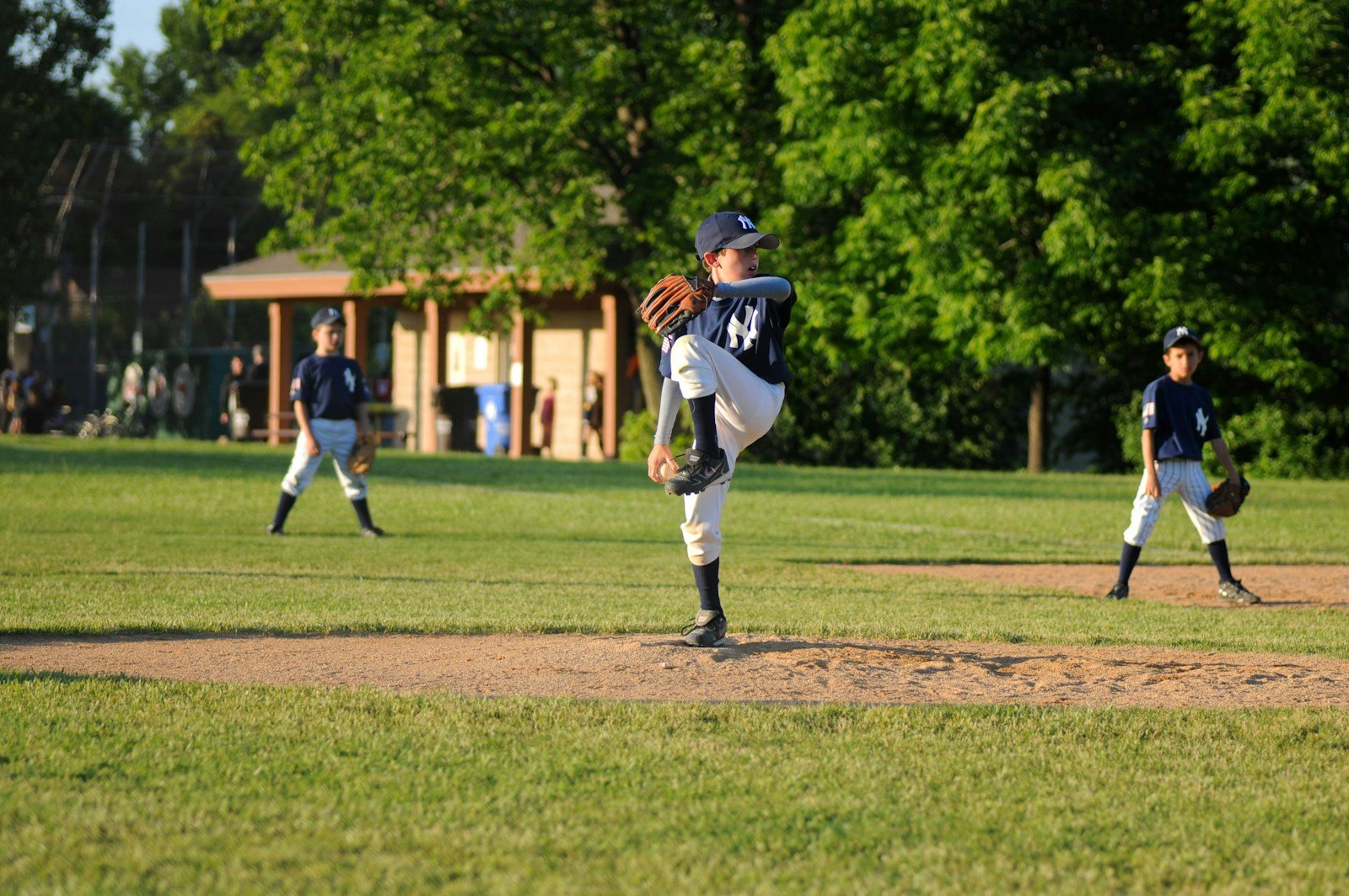
A $10,000 baseball season is not the norm. But for some families, the combination of team fees, tournaments, travel and private instruction can reach that figure surprisingly quickly. Here is what the numbers tell us—and what parents should ask before paying.
The expensive season that sneaks up on you
It starts with registration. Then a uniform package. A new bat. A weekend tournament two hours away. One hotel night becomes two. Add a few hitting lessons and suddenly the family calendar looks like a second job—with an expense account attached.
You don’t have to dislike travel baseball to ask whether the spending makes sense. The kids may love their teammates. Coaches may be terrific. Competition can build confidence and friendships. But a good experience and a good financial decision are not automatically the same thing.
First, a reality check: $10,000 is an illustrative higher-cost season, not a national average. The Aspen Institute’s Project Play survey found that U.S. sports families spent an average of $1,016 on a child’s primary sport in 2024, up 46% from 2019. That figure spans sports and participation settings; it is not a baseball-only or travel-baseball estimate. Read the original survey analysis.
Calculate your own baseball season costs
Use the interactive sliders below to customize the example budget for your family. Your selections stay in your browser.
How a $10,000 baseball season can happen
Consider this hypothetical family playing a competitive travel schedule. These are illustrative assumptions, not surveyed average prices. Actual costs vary dramatically by location, age, club and how often the team travels.
| Expense | Illustrative annual cost |
|---|---|
| Team and registration fees | $2,200 |
| Tournaments and entry-related costs | $1,200 |
| Hotels and lodging | $1,800 |
| Gas and travel | $1,200 |
| Equipment and uniforms | $800 |
| Private lessons and training | $1,800 |
| Food and miscellaneous | $1,000 |
| Total | $10,000 |
That’s roughly $833 per month spread across the year. The table assumes the tournament line covers family-paid tournament-related charges beyond the team-fee line; families should avoid double-counting entry fees already included in dues.
The lesson isn’t that every family spends this much. It’s that small recurring decisions can create a large annual commitment. And when a household has two or three children in sports, the trade-offs compound.
Who gets paid? Follow the youth baseball dollar
Youth baseball isn’t one business. It’s a network of businesses and nonprofit organizations with different economics.
Travel clubs and team operators
Club fees may pay for coaching, field rentals, insurance, uniforms, administrative support and tournament entry. Some organizations operate as nonprofits; others are commercial businesses. A high registration price does not, by itself, establish a high profit margin. Ask for a clear list of what is included and what will be billed separately.
Tournament organizers
Events generate revenue through team entry fees and, depending on the event, admissions, concessions, parking, vendors or sponsorships. Their costs can include field access, officials, staffing, insurance and operations. A crowded tournament weekend can be good for nearby hotels and restaurants even when the organizer’s own economics are less straightforward.
Facilities and independent coaches
Indoor training centers and private instructors sell scarce practice time, instruction and convenience. But rent, utilities, insurance, equipment, marketing and payroll can consume substantial revenue. Before assuming every $80 lesson is pure profit, remember the business has to cover more than the hour on the calendar.
Equipment, technology and travel
Bats, gloves, uniforms, scheduling software, team-payment tools, video analysis, hotels and restaurants all sit in the wider ecosystem. For entrepreneurs, that’s an opportunity to solve real problems. For families, it’s a reminder to distinguish useful services from purchases driven mainly by pressure to keep up.
The participation paradox: More players, more pressure
Commercialization is not the whole story. Participation can rise even as some families feel squeezed. The Aspen Institute’s State of Play 2025 reported that youth sports participation had recovered from the pandemic, while also warning that expensive club programs and underfunded community options can widen access gaps.
The Sports & Fitness Industry Association reported that 92.3 million Americans ages six and older played a team sport in 2025, a 7.6% increase. It also found that the number of current youth team-sport coaches fell from 8.4 million in 2022 to 6.9 million in 2025. Those are all-team-sports figures, not baseball-specific counts.
One detail deserves more attention: in SFIA’s survey, people cited fun (58.4%) more often than competition (26.1%) as a reason to play team sports. Kids may want to improve and win, but they also want friends, belonging and a reason to come back next week.
Is a college scholarship a sound return-on-investment strategy?
Parents sometimes justify escalating sports costs as an investment in future tuition savings. That deserves a careful look.
The NCAA’s 2024–25 participation estimates put the share of high school baseball players who go on to play NCAA baseball at approximately 8.8%, including 2.7% at Division I. These are estimates based on high school and NCAA participation counts, not an individual child’s odds. They also exclude other college pathways, including junior colleges and NAIA programs.
Playing NCAA baseball and receiving a substantial athletic scholarship are different outcomes. Across sports, the NCAA says only about 2% of high school athletes earn an athletics scholarship, and most scholarships are partial. That 2% is an all-sports figure, not a baseball-specific scholarship probability. Division III schools do not award athletics scholarships, although students may qualify for academic or need-based aid.
None of this means a talented child shouldn’t pursue college baseball. It means the family budget shouldn’t depend on a hypothetical scholarship paying back years of travel costs. If a family spends $10,000 annually for five seasons, that’s $50,000 before considering what that money might otherwise have funded.
What families are actually buying
Some of the most valuable returns cannot be captured on a spreadsheet: learning to handle a strikeout, cheering for a teammate, accepting feedback, working through a tough season, or simply spending time together.
But more expensive does not necessarily mean more developmental. The right question isn’t whether travel baseball is good or bad. It’s whether a particular team offers the right experience for this child at a price this family can sustain.
Consider playing time, coaching quality, communication, injury prevention, travel demands, the child’s own enthusiasm and whether the season leaves room for school, friends and unstructured play. A child who loves baseball should not have to feel responsible for the family’s financial sacrifice.
Seven questions to ask before committing
- What’s the true all-in price? Ask for last season’s total, including travel and extras.
- What exactly do dues cover? Clarify uniforms, tournament entry, indoor practice and coach travel.
- How much time will the season require? Count practices, games, travel and missed family weekends.
- How will players develop? Look for specific coaching plans, not vague promises of exposure.
- How is playing time handled? Ask how expectations change by age and competition level.
- Are there lower-cost alternatives? Compare community leagues, school programs and selective clinics.
- Does the child still want this? The strongest case for participation starts with the player, not the adults.
A better scoreboard for youth sports
There’s nothing wrong with healthy competition. Winning matters because trying hard matters. But the scoreboard shouldn’t be the only measure of a successful season.
Maybe a better scorecard tracks whether children improve, build friendships, learn to lead, gain confidence and want to play again. Those outcomes can happen in a well-run travel program, a local recreation league or a backyard game with friends.
And the business opportunity isn’t necessarily to sell families more of everything. It may be to build better-value sports experiences: transparent pricing, flexible scheduling, quality coaching, less unnecessary travel and more accessible ways to participate.
That is where the economics of youth sports meets the bigger question of what sports are for.
Want to know what your family’s season really costs?
Subscribe to Run The Money for practical reporting on the business of sports, family finances and the people building businesses around the games we love. We’re preparing a free Youth Sports Budget Worksheet for subscribers; it is not yet available.
Sources & Methodology
How this article was prepared: The $10,000 budget is an editorial illustration constructed by adding seven hypothetical cost categories. It is not a reported family case study, national average or quote from an interviewee. No original interviews are claimed. All external statistical claims are attributed to their originating organizations below. Readers can review the linked source material and the underlying methodology.
- Aspen Institute Project Play, family spending survey (2025)
- Aspen Institute, State of Play 2025
- Sports & Fitness Industry Association, 2026 team sports participation
- NCAA, Probability of Competing Beyond High School
- NCAA, Student-Athlete Scholarships and Grants
- NCAA, Division III eligibility and scholarships
Editorial note: Costs, participation and scholarship rules can change. The reported data refer to the years identified in the text; the example budget is hypothetical. This article does not constitute financial or college-recruiting advice.
Some content on this site is contributed by partners or external sources. All submissions are reviewed for quality.
0 responses to “The $10,000 Little Leaguer: How Youth Baseball Became Big Business”